
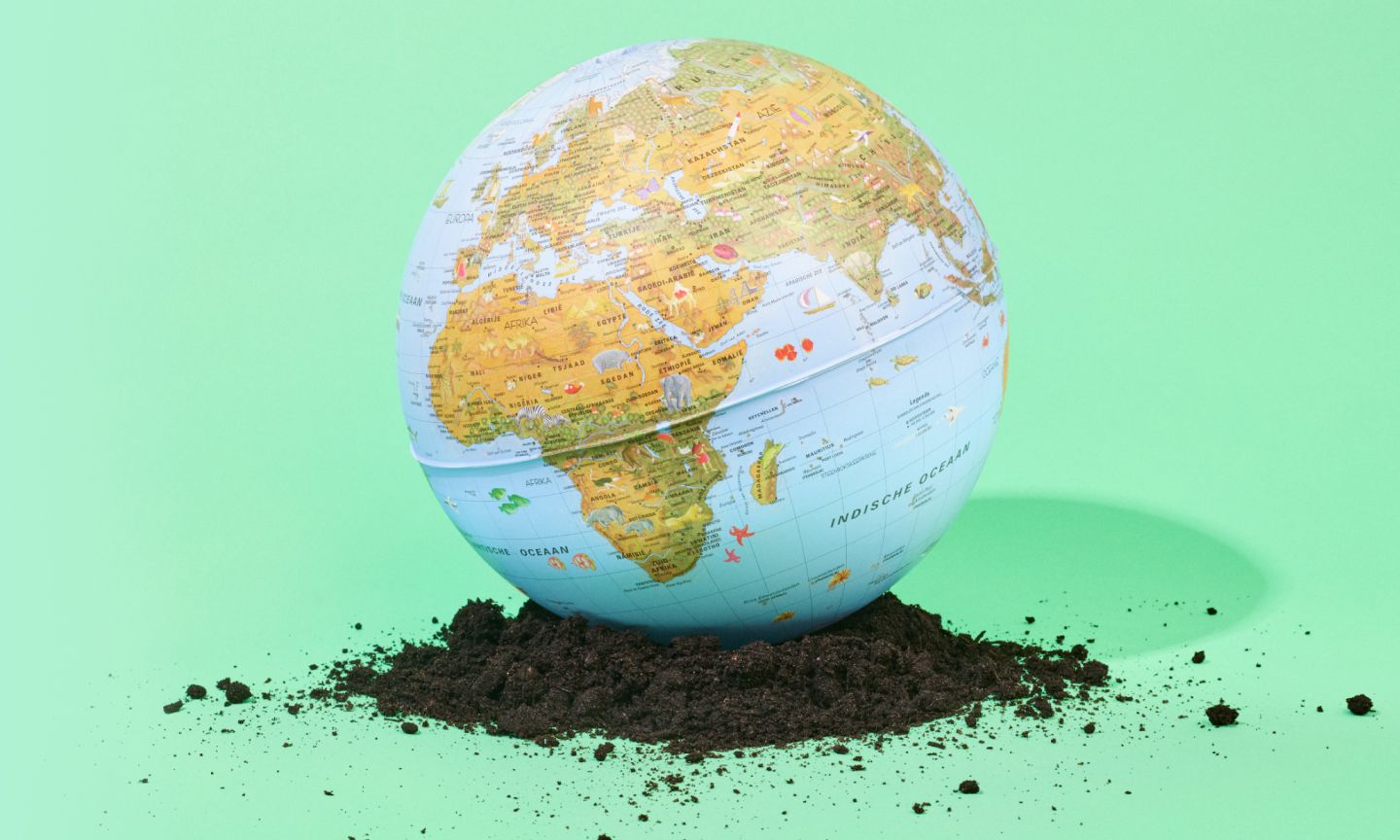
Bol started in 1999 as an online store with the aim of making the purchase of products as easy as possible for the customer. The e-commerce market has been changing continuously since then, which requires bol to not only be flexible and innovative, but also to take responsibility. This desire to improve is in our nature, which is why we want to make sustainable shopping easier and we want to take our customers, suppliers and sales partners with us on this journe.
In this article, we will show you the steps we have already taken in this area and explain how we see the future. Since when has sustainability become an important part of our company? How are we doing now in terms of making our processes more sustainable? And how are we going to make shopping more sustainable in the future? In short, more sustainable shopping at bol: then, now and in the future.
To make sustainable shopping easier, we focus on two main components. On the one hand, our own process, such as everything in and around the distribution centre, packaging, energy consumption and delivery. Here we have a direct influence on the reduction of CO2 emissions. On the other hand, sustainable shopping consists of the range that is for sale via bol and its production. After all, this is where the vast majority of the total emissions come from.
Then: internal need for a more sustainable course
When we started building the bol Fulfilment Center in Waalwijk in 2016, we wanted to do it as responsibly as possible for the environment. That is why it was built according to the standards of the BREEAM quality mark (Building Research Establishment Environmental Assessment Method), where we aimed for the highest level (outstanding). This showed that we as a company considered it important to reduce the impact on our environment. This was already felt among the bol colleagues at the time, 85% of whom indicated that they would be prouder of bol if we would work more on more sustainable entrepreneurship.
That was the driving force behind setting up a sustainability department, initially with one full-time employee. Despite this new department, sustainability was only ‘something extra’ at that time. Bol colleagues who wanted to contribute to this initially worked on sustainability projects when they had time left.
Gradually, more and more steps were taken and the ambition to become more sustainable grew. It started with small projects, such as switching to green energy for our own buildings, research into more efficient processes and a model to calculate the emissions of all our processes. In addition, we looked at ways to better inform customers about the impact of products. As a test, labels were added to products within a number of product categories, to show that these products are a good choice. In 2019, this led to the launch of a store environment with only products with quality marks.ing met alleen maar producten met keurmerken
Now: B Corp, 1,7 milion labelled products with the Good Choice-label
Today, sustainability is one of the most important spearheads in our strategy and the sustainability team has been expanded from one to ten people. Since 2023, bol has been a B Corp, which means that high, verified standards in the field of social and environmental impact are met. We do not see certification as a goal in itself. With the B Corp certification, we have made a commitment for the future to continue to increase our positive impact on society. In addition, the certification process makes us even more aware of our impact on the earth. In recent years, we have continued with labeling: more than 1.7 million articles on the website now have a Good Choice label. The Good Choice label indicates that an article has positive quality marks or properties that have been assessed by Milieu Centraal. In addition to the recognisability with the Good Choice label, the findability of these products has been worked on by means of filters and banners.
We also encourage more sustainable shopping by further reducing the impact of the logistics process with initiatives such as energy recovery with our mechanical storage system, NoPack and Ampere. To minimize the chance of a return, we are constantly working on ways to make product information more complete: from reviews to size charts and from extensive specifications to clear images.
As part of Ahold Delhaize, we contribute to the climate objectives of the parent company that have been drawn up on the basis of the guidelines of the ScienceBased Target initiative (SBTi). Collaboration in the chain is essential to achieve this. To help suppliers with this, we recently launched the Climate Hub.
Soon: from linear naar circular
Previously, we focused on the journey of a sold product until the customer has it in their home. But the journey does not end there: products still have a whole life after delivery to the customer. That is why we want to introduce circular business models in the coming years, for which the first steps have already been taken. That is where the future of consumption lies for us: reuse, extending the life cycle of products, with as little waste as possible. Think of refurbished products, for example.
Dennis van den Berg, Head of ESG at bol: “Ultimately, we do not want to be part of the problem of climate change, but contribute to the solution. Through our position in society and the good and frequent contact with our customers, we can make consumers more aware of what they buy. And in this way, hopefully, take steps together towards a world in which circularity is mainstream. There is still a way to go, but it is great to see that everyone at bol is participating and wants to move forward.”
Background: bol as a platform
Bol is an e‑commerce platform. But what does that actually mean?...