
What brands, creators and partners can learn from bol’s social & influencer strategy

Social media have long been more than just a place for inspiration. They play an increasingly important role in how consumers discover, compare and buy products. During the Webwinkel Vakdagen, Isaac Diepenhorst, Manager Social & Content at bol, showed what this shift looks like in practice—and why collaborating with creators is indispensable. How do you not only keep up in this fast-changing environment, but also make sure you are where people’s attention is? “As a marketer, you have to be where the attention is,” says Isaac. “And that’s shifting more and more to social platforms, especially TikTok.”
From inspiration channel to sales channel
Where social media used to be deployed mainly to build brand awareness, today the customer journey increasingly starts on platforms like TikTok and Instagram. Discovering, comparing and buying: it happens more and more within one and the same environment. “For us, social is no longer just an inspiration channel, but also a performance channel,” Isaac explains. “We’re seeing that social contributes more and more directly to traffic and sales.”
TikTok as an essential part of the media mix
When bol started with TikTok about four years ago, the platform was mainly popular among teenagers. By now, that picture has changed significantly. “We’re seeing strong growth in the 25 to 44 age group,” says Isaac. With that shift in age, purchasing power increases as well, making TikTok in particular commercially more and more relevant.
According to research, Gen Z sometimes spends up to four hours a day on TikTok. “That’s an insane amount,” Isaac says. “But above all, it underscores one thing: if attention is there, then as a brand you need to be there.”
Why faces work better than products
The simple, characteristic images featuring products and a short humorous caption on bol’s social channels worked well, and still do. But with the rise of short-form video, the playing field changed for bol.
“In the beginning we kept products at the center,” Isaac says. “But two years ago we made a clear switch. We saw in the data that content featuring people performs better than studio or product shots.”
The reason is simple: people connect with people. You have half a second to make someone stop scrolling. If there’s a face on screen, people watch longer, which leads to higher engagement and better click-through rates.
Influencers and creators: what’s the difference?
Within bol, a clear distinction is deliberately made between influencers and creators:
- Influencers leverage their own reach, often tens of thousands to millions of followers.
- Creators produce content for bol channels, with bol providing the reach.
“Those terms are often used interchangeably in the market,” Isaac says. “But for us, this distinction is important. Creators are extremely good at making native, platform-specific content that fits specific niches.”
From mass channel to niche community
Because everyone is in their own “content bubble,” bol increasingly opts for category-specific channels. Think of accounts like bol.beauty, bol.gaming and, more recently, bol.ouders.
“Gaming next to make-up on one channel works less well,” Isaac explains. “By organizing content per category, you build more relevance and authority.”
The responses under videos are just as important. “People go straight to the comments,” says Isaac. “They ask questions about price, availability and experiences. That’s why we actively invest in community management. If you take TikTok seriously, it comes with the territory.”
Social commerce delivers measurable results
Social commerce is no longer an experiment. The results are concrete:
- High organic visibility;
- Low cost-per-click;
- An increase in search volume on bol;
- A demonstrable uplift in sales, sometimes even leading to temporarily sold-out products.
“What’s interesting,” Isaac adds, “is that the impact remains visible even after publication—without extra media budget.”
Bol works with creators in three different ways:
- Creator networks: platforms where creators can sign up for a briefing from a company. The content is specific.
- Affiliate and storefront models, where creators open their own “storefront” shop within bol and use an affiliate model.
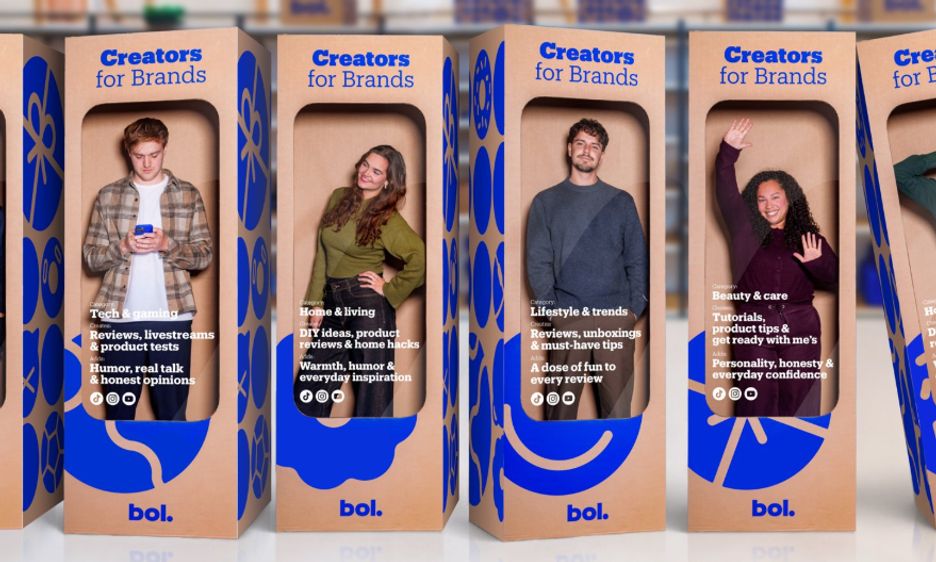
- Creators for Brands, a new end-to-end concept from bol Retail Media that enables brands to reach new audiences in a creative way. Together with selected creators, social experts create authentic, platform-first content that makes products and stories visible on bol’s social channels.
TikTok as a search engine
Finally, Isaac points to an important development: social media as a search engine. Especially younger generations of shoppers open TikTok when they’re looking for products. They ask their question and immediately get videos with answers.
That also makes social content relevant for discoverability outside the platform. Short-form videos are increasingly indexed and indirectly contribute to visibility in Google.
Social commerce offers opportunities for bol and partners
Social commerce, and with it the creator economy, is growing extremely fast, including in the Netherlands. By making creators a structural part of campaigns, content and commerce, bol clearly positions itself as an early mover.
“This isn’t a trend that will blow over,” Isaac concludes. “Creators have become a permanent part of how people discover and buy. And that creates opportunities, for bol and for partners.”
Bol introduces 'Branded Shelves': brands in the spotlight
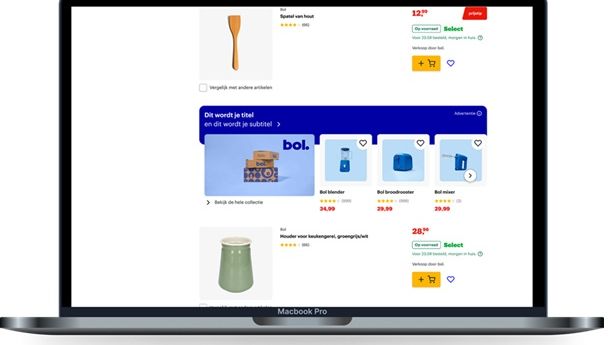
New advertising product gives sales partners and suppliers their own d...